



CJ Koome outlines key justice reforms, pledges responsive Judiciary

CJ Koome outlines key justice reforms, pledges responsive Judiciary
Chief Justice Martha Koome has outlined key strategies being implemented by the Judiciary to enhance the administration of justice, while reaffirming her commitment to building a responsive Judiciary that is attuned to the justice needs, lived experiences, and evolving expectations of Kenyans.
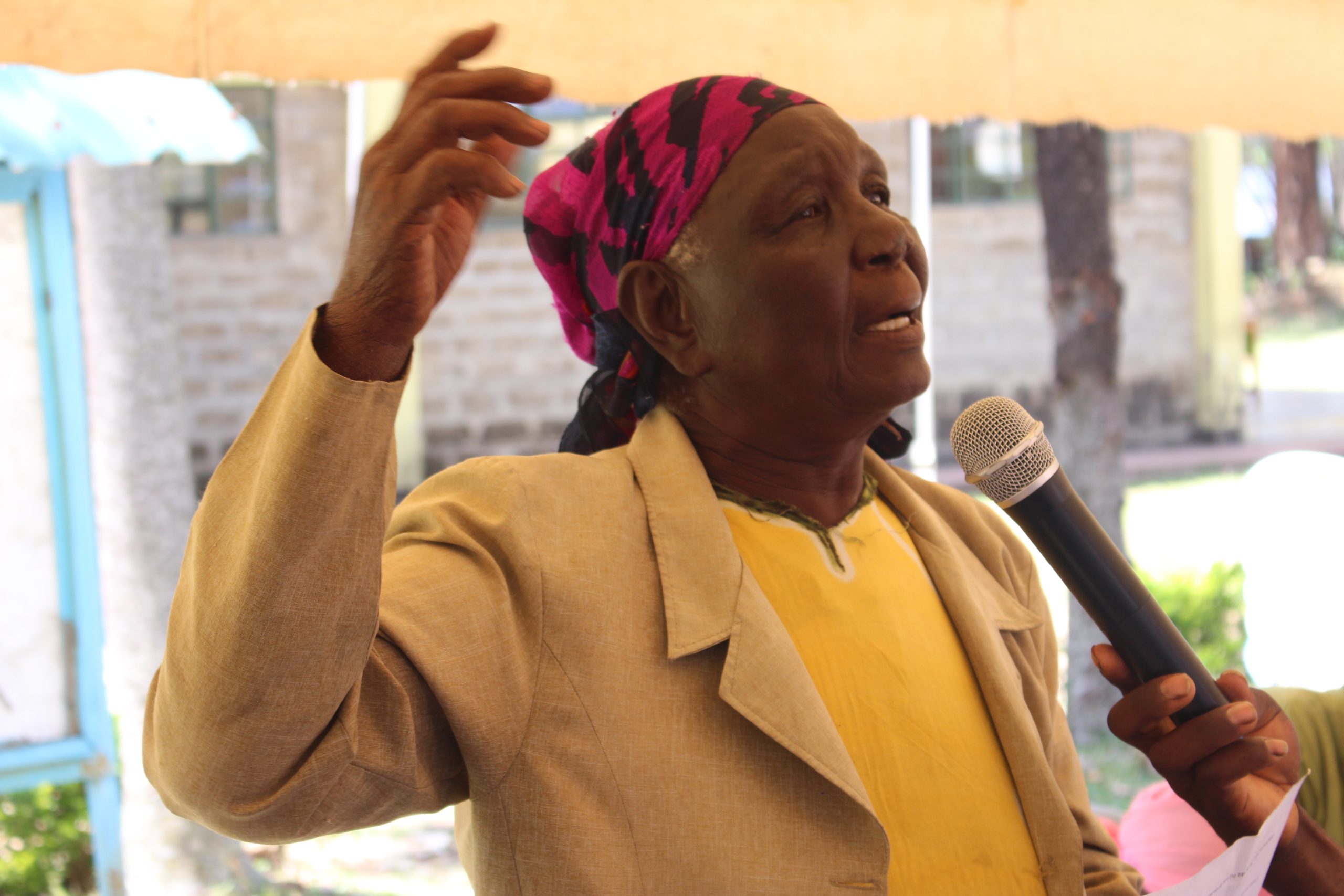
Speaking during this year’s Judiciary Dialogue Day at Kibera Law Courts which is being observed in courts across the country, CJ Koome said that justice system must be shaped through continuous engagement with the people it serves.
“We established the Judiciary Dialogue Day as a deliberate platform for listening. This dialogue is about hearing directly from you—the court users, justice seekers, advocates, community leaders, and justice sector partners—on how the Judiciary is performing and, more importantly, how we can do better,” said the Chief Justice.
Justice Koome noted that the Judiciary is making deliberate and sustained efforts to expand and decentralise court and tribunal services nationwide. She said these efforts are guided by a clear policy to establish a Magistrates’ Court in every sub-county and a High Court station in every county.
“This approach is aimed at reducing the distance, cost, and inconvenience that many Kenyans face when seeking justice, recognising that access to justice should not require long travel or prohibitive expenses,” she said.
The CJ added that the Judiciary is actively championing a multi-door approach to justice, which encourages the use of mediation, arbitration, and Alternative Justice Systems, including traditional and community-based mechanisms, where appropriate.
The Chief Justice also pointed out that the Judiciary has prioritised prison decongestion through regular exercises aimed at diverting petty offenders to community service and ensuring that remand prisoners are not held unnecessarily over minor offences.
Additionally, CJ Koome said the Judiciary is addressing long-standing bottlenecks that have hindered the timely resolution of cases by setting clear performance benchmarks. “Under these benchmarks, no case should remain in a trial court for more than three years, while appeals should be resolved within one year.”
She added: “We as a Judiciary appreciate that Kenyans want justice that is not only fair but also timely. Delayed justice undermines public confidence and denies justice in practical terms.”
She noted that the Judiciary is leveraging technology to enhance efficiency and transparency through the digitisation and automation of court processes.
“We understand the challenge of delayed typing of proceedings, which affects the preparation of appeal files. To address this, we are piloting the use of Artificial Intelligence (AI) in transcription to ensure proceedings are typed in a more timely manner,” the CJ said.
While reaffirming that the Judiciary is a corruption-free zone, CJ Koome called for a whole-of-society approach in the fight against corruption, urging all Kenyans to play an active role.
“I therefore call upon all Kenyans to refuse to pay bribes for services to which they are lawfully entitled, to report corrupt practices whenever they encounter them, and to reject the normalisation of corruption as ‘the way things are done.’ Silence only enables corruption to thrive, while collective action defeats it,” she said.
Supreme Court Judge Smokin Wanjala who was speaking from Butali Law Courts explained that the Dialogue Day is intended to provide members of the public with an opportunity to identify challenges affecting the administration of justice, with a view to enhancing access to justice. He encouraged them to be open and to take full advantage of the forum to share feedback on issues that affect them and promised to forward the issues to the Judiciary leadership.
Also speaking at Malindi Law Courts, Supreme Court Judge Njoki Ndungu said the Judiciary listens, learns, and evolves with its stakeholders and the people. She called on court users to see the Dialogue Day as a shared space for honest reflection and partnership, reaffirming the Judiciary’s commitment to a people-centred justice system that upholds the Constitution, protects dignity, and serves every Kenyan without fear or favour.
At Sotik Law Courts where the Chief Registrar of the Judiciary Hon Winfridah Mokaya addressed members of the public during the Judiciary Dialogue Day, affirmed that Judiciary is a listening institution.
“We are here to hear how you want us to improve our services,” she said and urged all stakeholders to work together to address issues that affect the community.
She added: “Judiciary cannot work alone. We must strengthen partnerships. Cases involving children for instance – child alcoholism, incest, defilement – are societal issues that need multiple stakeholders to resolve,” the CRJ observed, adding that “when everyone does their small part, we shall have a good society.”
CRJ Mokaya assured members of the public and stakeholders that the feedback that they give the Judiciary will be acted upon. “Its not just about talking, we are keen on collating the feedback collected throughout the country and implementing the recommendations given.’ She said.
The Judiciary Dialogue is an annual initiative through which the Judiciary engages with consumers of justice to continuously improve service delivery.
Ends/…