


16
March
0
Comments
Closing of File Proceedings Held in Honour of Justice Mohammed Ibrahim
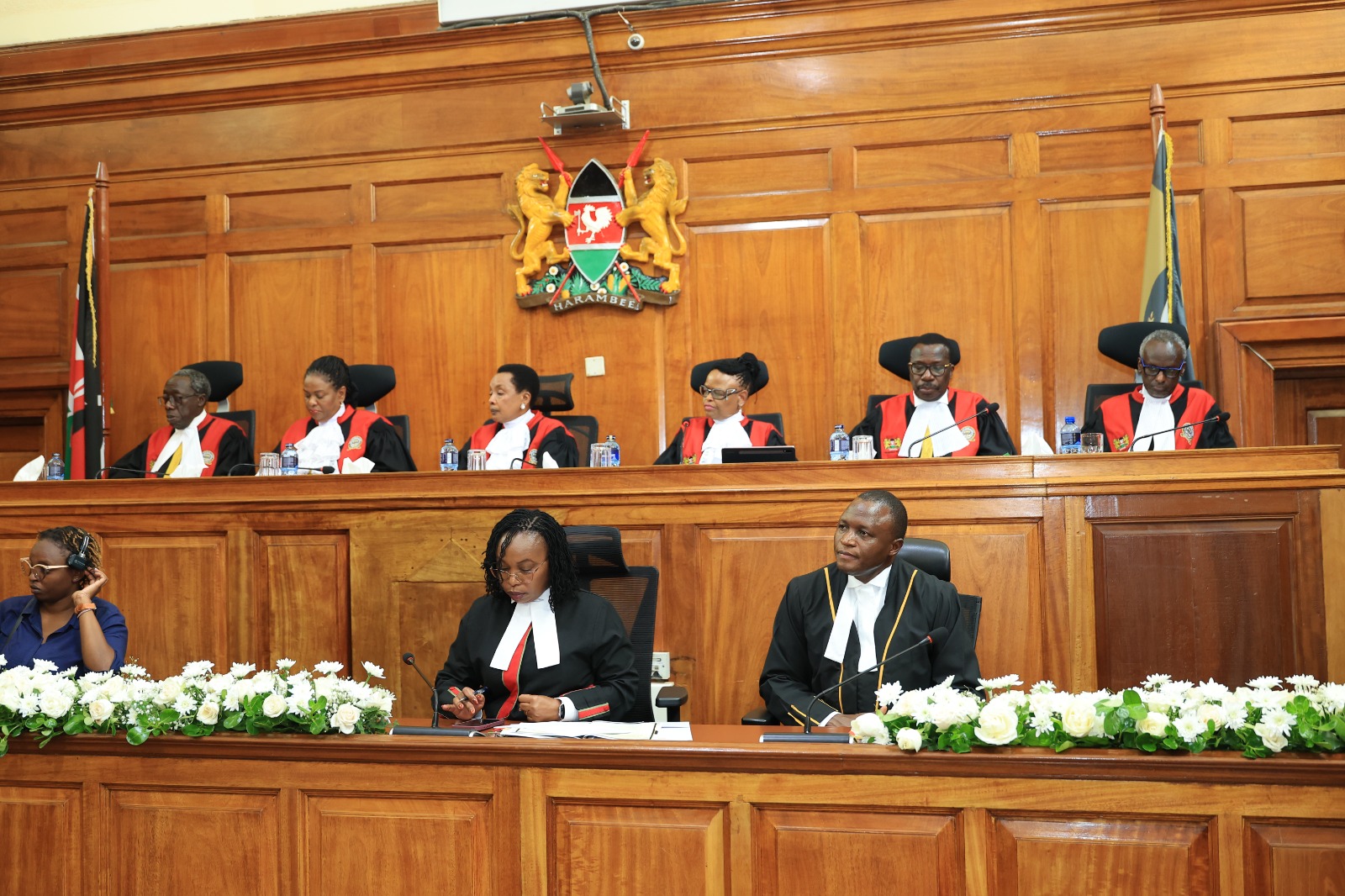
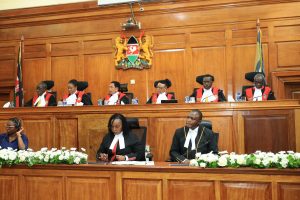
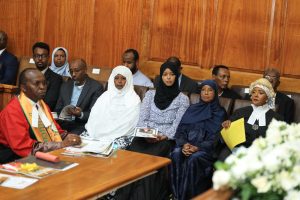
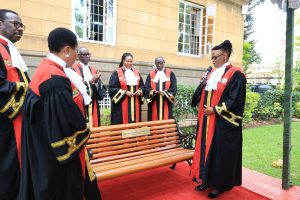
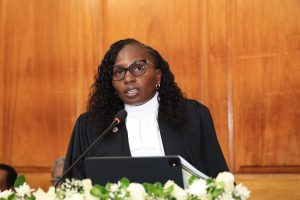
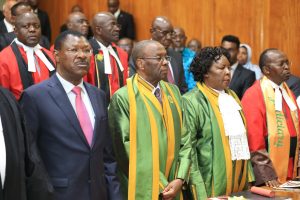
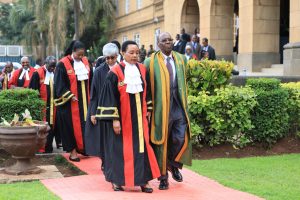
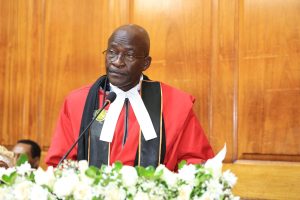
Chief Justice and President of the Supreme Court Martha Koome today led the Judiciary in honouring the late Mohammed Khadhar Ibrahim, Justice of the Supreme Court of Kenya, during Closing of File Proceedings held as a mark of respect for his distinguished service to the law and the nation.
Speaking during the solemn ceremony, the Chief Justice noted that the tradition of conducting Closing of File Proceedings for departed members of the Bench and Bar serves as a symbolic reminder of the noble responsibility borne by legal practitioners. She observed that judges and advocates are called to serve as custodians of justice, entrusted with upholding the rule of law with integrity, professionalism, and dedication.
The Chief Justice paid tribute to Justice Ibrahim as a champion of the rule of law and human rights whose contributions to Kenyan jurisprudence and the administration of justice remain profound. She noted that throughout his career, Justice Ibrahim exemplified unwavering commitment to justice and constitutionalism, leaving an enduring legacy within the Judiciary and beyond.
Long before his appointment to the Bench, Justice Ibrahim had already distinguished himself as a fearless advocate for human rights, democratic governance, and constitutional reform during some of Kenya’s most challenging periods. He stood firmly with the voiceless, even at great personal risk, including detention without trial. His advocacy reflected a steadfast belief that the law must function both as a shield for the vulnerable and a restraint against abuse of power.
Justice Ibrahim’s judicial career began with his appointment as a Judge of the High Court of Kenya in 2003. Over the following years, he served in several divisions and court stations, gaining wide-ranging experience across civil, commercial, constitutional, and criminal law.
He initially served in the Civil Division in Nairobi, where he presided over a broad range of disputes that exposed him to the everyday realities faced by litigants seeking justice. Shortly thereafter, he was transferred to the Commercial Division at Milimani, where he handled complex matters involving banking, securities, mortgages, company law, and intellectual property. His decisions in this division reflected a deep understanding of Kenya’s evolving commercial environment and the importance of efficient dispute resolution.
In 2004, Justice Ibrahim joined the Judicial Review and Constitutional Division, where he served on both single-judge and multi-judge benches. This assignment marked a pivotal stage in his judicial journey, allowing him to contribute significantly to the development of constitutional jurisprudence in Kenya during a transformative period in the country’s democratic history.
His judicial leadership continued when he was posted to Eldoret in 2006, where he handled both civil and criminal matters, including serious criminal trials and appeals. In 2007, he became Resident Judge, overseeing court operations across the North Rift region and demonstrating notable administrative leadership.
Justice Ibrahim later served as Resident Judge in Mombasa beginning in 2009, where he presided over a heavy caseload within the coastal jurisdiction. Among his landmark decisions was a ruling affirming the jurisdiction of Kenyan courts to try piracy offences committed on the high seas, a judgment that attracted global scholarly attention.
He also delivered a groundbreaking ruling granting bail to an accused person charged with murder under the new constitutional framework, establishing an important precedent in the interpretation of bail rights in capital offences. In another notable decision, he nullified the election of a sitting Cabinet Minister in an election petition, reinforcing the Judiciary’s independence and the principle of free and fair elections.
Justice Ibrahim’s vast experience at the High Court prepared him for elevation to the Supreme Court of Kenya in 2011, where he joined the inaugural bench established under the Constitution of Kenya 2010. During his tenure, he participated in numerous landmark decisions, including presidential election petitions and key constitutional interpretation cases that have shaped Kenya’s democratic governance.
The Chief Justice noted that Justice Ibrahim firmly believed in the importance of dissenting opinions within judicial decision-making. His dissents reflected an independent judicial philosophy rooted in constitutionalism, human dignity, and the protection of individual liberty.
Beyond adjudication, Justice Ibrahim served in several leadership roles within the Judiciary. As the senior-most judge after the Chief Justice and Deputy Chief Justice, he frequently acted as President of the Supreme Court when called upon. He also chaired the Judiciary Committee on Elections, overseeing training and preparedness of judges and judicial officers in handling election petitions.
In addition, he oversaw the Supreme Court’s strategic planning portfolio and played a key role in strengthening institutional engagement with stakeholders, including judicial associations and civil society. In 2022, he was elected as the Supreme Court’s representative to the Judicial Service Commission of Kenya, contributing to judicial governance, appointments, and reforms.
Concluding her tribute, the Chief Justice described Justice Ibrahim as a legal giant whose life was dedicated to the pursuit of justice and truth. She noted that his work helped shape Kenya’s constitutional culture and safeguard the freedoms enjoyed today.
“The values he stood for — courage, fairness, empathy, and justice — will continue to guide us,” the Chief Justice said. “His legacy lives on in the rights he defended, the people he mentored, and the society he helped transform.”
The Judiciary expressed gratitude for Justice Ibrahim’s life and service, noting that his enduring contributions will remain a guiding light for future generations committed to the rule of law.
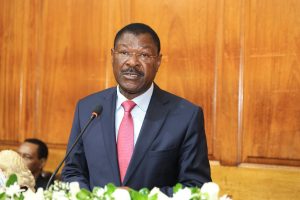
Others who addressed the Court are Law Society of Kenya president Faith Odhiambo, Senior Counsel Paul Muite, Chair Senior Bar Phillip Murgor, National Assembly Speaker Moses Wetangula, Amb. Amina Mohammed-on behalf of family Chief Registrar of the Judiciary Winfridah Mokaya, High Court Principal Judge Eric Ogola, Court of Appeal President Daniel Musinga, Rtd Lady Justice (Dr.) Nancy Baraza and Chief Justice Emeritus Dr. Willy Mutunga among others.