


25
March
0
Comments
DCJ Calls for Strengthened Judicial Protection for Vulnerable Women and Children
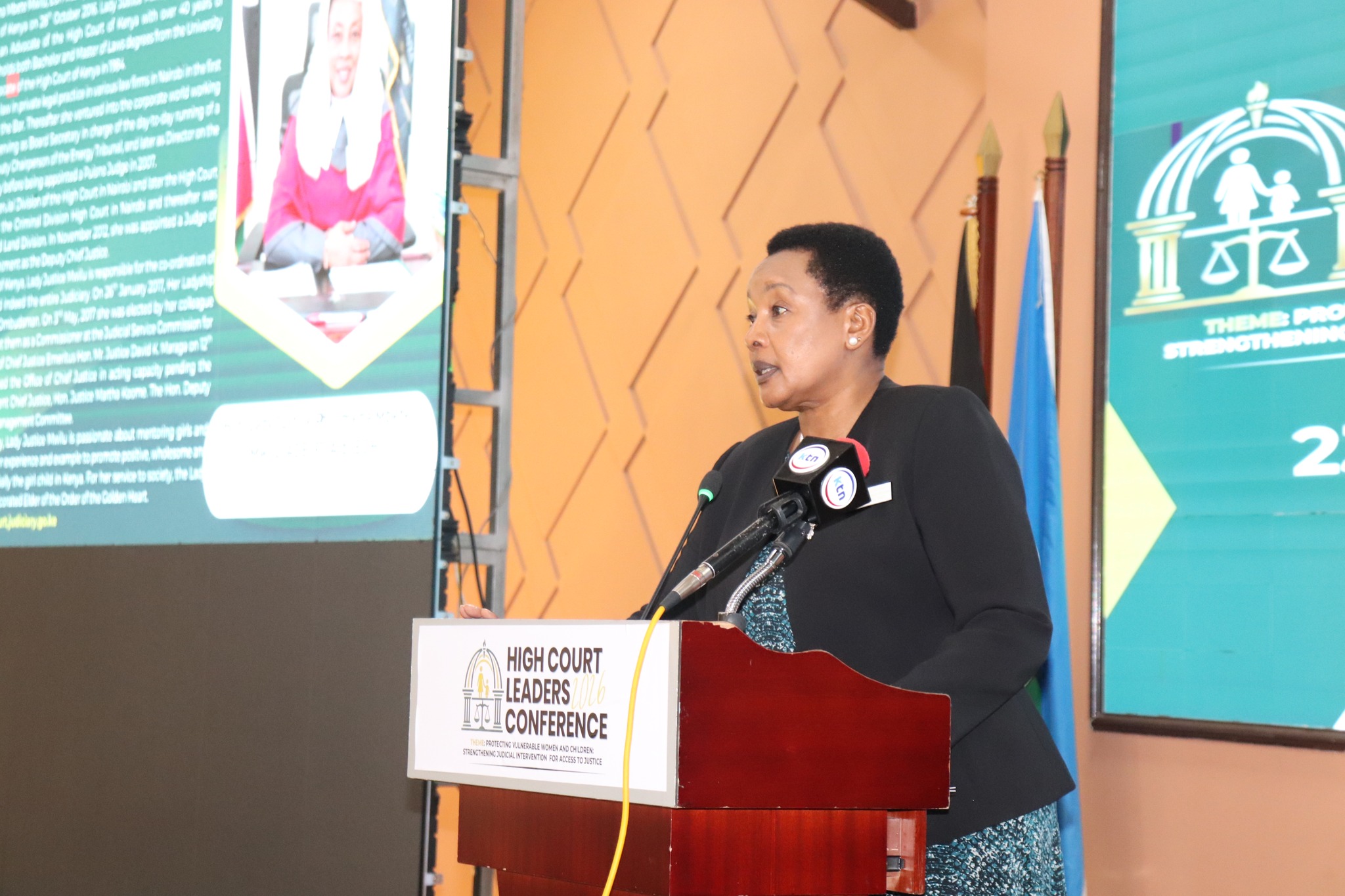
Deputy Chief Justice and Vice-President of the Supreme Court, Philomena Mbete Mwilu, has called on High Court judges to deepen their commitment to protecting vulnerable women and children through responsive, humane, and constitutionally grounded judicial practices.
Speaking during the opening of the High Court Leaders Conference held in Naivasha the Deputy Chief Justice underscored the pivotal role of the High Court in advancing the country’s constitutional vision and delivering meaningful access to justice.
She described the annual forum as a critical platform for reflection, evaluation, and strategic planning among judicial leaders, noting that it provides an opportunity to assess progress, address challenges, and strengthen service delivery. Emphasising the Judiciary’s Social Transformation Through Access to Justice (STAJ) agenda, she stated that access to justice must go beyond the existence of courts to ensuring that rights are effectively realised and remedies are accessible, fair, and timely.
Highlighting the conference theme, “Protecting Vulnerable Women and Children: Strengthening Judicial Intervention for Access to Justice,” the Deputy Chief Justice termed it both urgent and necessary. She noted that the High Court, as a central pillar in Kenya’s judicial architecture, plays a vital role in shaping constitutional culture by safeguarding rights, enforcing accountability, and addressing the lived realities of citizens.
She pointed to the growing concern over sexual and gender-based violence, including rising cases of femicide, and called for a coordinated, multi-sectoral response. Referencing the work of the taskforce chaired by retired Deputy Chief Justice Nancy Baraza, she urged the Judiciary to play its part in addressing the crisis through effective adjudication and institutional reforms.
On children’s rights, the Deputy Chief Justice cited recent findings indicating that over half of Kenya’s children experience multidimensional poverty, which limits access to essential services and justice systems. She emphasised the need for child-sensitive approaches, timely case management, and improved accessibility to ensure that the justice system does not exacerbate vulnerability.
Further, she highlighted internal Judiciary data showing relatively low participation of women in court processes, urging reflection on potential structural barriers such as affordability, accessibility, social norms, and fear of reprisal. She challenged judges to examine whether court procedures, environments, and practices are sufficiently responsive to the needs of women and children.
The Deputy Chief Justice stressed that protecting vulnerable groups is a constitutional obligation rooted in the Bill of Rights, not an act of charity. She called for the adoption of trauma-informed judicial approaches that recognise the realities of survivors and children, including the impact of trauma on testimony and participation in legal proceedings.
She also urged judicial leaders to foster court environments that uphold dignity, ensure confidentiality, minimise delays, and enhance coordination with other justice sector actors. She noted that leadership at the station level is critical in tailoring responses to local challenges affecting women and children.
The Deputy Chief Justice encouraged participants to engage actively in the conference, share best practices, and align institutional systems with the urgency of protecting vulnerable groups. She expressed confidence that the deliberations would strengthen jurisprudence, improve institutional practices, and reinforce the Judiciary’s commitment to delivering justice for all.
Justice Smokin Wanjala, Judge of the Supreme Court and Director General of the Kenya Judiciary Academy, emphasised the constitutional and moral duty to protect vulnerable groups, he noted that Kenya’s legal framework—supported by statutes such as the Children Act and Sexual Offences Act, as well as international conventions—provides a strong foundation for safeguarding the rights and dignity of women and children.
High Court Principal Judge Eric Ogola underscored the significance of the theme “Protecting Vulnerable Women and Children: Strengthening Judicial Intervention for Access to Justice” as central to the Judiciary’s vision of Social Transformation through Access to Justice (STAJ). He challenged participants to assess whether justice for women and children has been fully realised, particularly in sensitive cases such as gender-based violence and child-related disputes.